
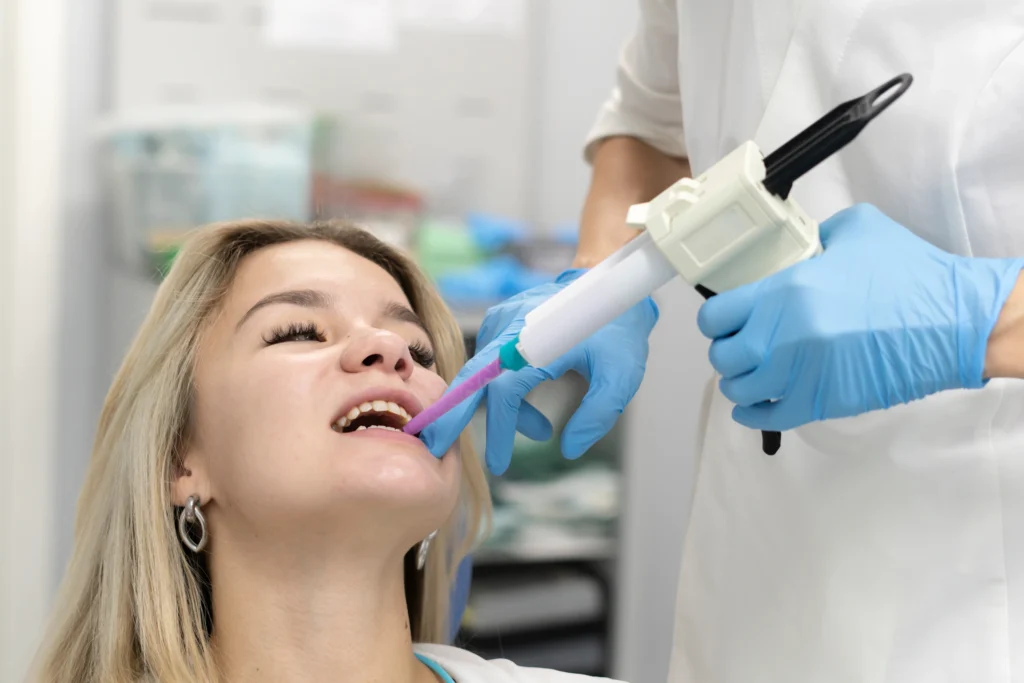
If you’ve had a hygienist appointment recently, you might have noticed something a little different — instead of the familiar scrape-scrape-scrape of a metal scaler, there’s a small handheld device gently misting your teeth with what feels like a soft, slightly gritty spray. That’s jet spray polish, and it’s quietly become one of the more popular upgrades in modern preventive dentistry.
If you’re wondering what it actually is, how it differs from a traditional clean, and why so many hygienists seem to reach for it these days, here’s everything you need to know.
What Is Jet Spray Polish, Exactly?
Jet spray polish — also known as air polishing or airflow polishing — is a dental cleaning technique that uses a controlled stream of compressed air, water, and a fine powder to remove plaque, surface stains, and soft bacterial buildup from your teeth. The powder is typically sodium bicarbonate or glycine, and occasionally erythritol, and it’s fine enough to gently lift away debris without the scrubbing action of older polishing methods.
Unlike the rubber cup and paste used in traditional polishing, or the metal scaler used for scraping away tartar, jet spray polish works without direct contact with the tooth surface. The spray itself reaches into tight gaps, gum pockets, and around braces or implants — areas that a rubber cup or hand instrument often can’t access nearly as thoroughly.
How Jet Spray Polish Actually Works?
The mechanics are surprisingly simple, even if the technology behind it isn’t.
The Main Components
Compressed air — provides the propulsion behind the spray.
Water — helps wash away food debris and makes the process comfortable.
Fine powder — (sodium bicarbonate, glycine, or sometimes erythritol) — is used as an abrasive to remove stains and plaque buildup.
The Process
The hygienist runs a small nozzle back and forth across your teeth in a controlled sweeping motion. The pressurised mixture essentially blasts away soft plaque, biofilm, and surface staining using kinetic energy rather than physical scraping. Because there’s no metal instrument dragging across enamel, the sensation tends to feel more like a light, refreshing mist than a traditional cleaning.
Why Does It Give You a Deeper Clean?
This is really where jet spray polish earns its reputation, and it comes down to a few specific advantages over traditional methods.
It Reaches Places Manual Tools Can’t
Air powder polishing can reach roughly five millimetres beneath the gum line. An area that’s notoriously difficult to clean thoroughly with rubber cups or manual scalers alone. This makes it particularly effective for people with early gum concerns, tight interdental spaces, or anyone whose oral hygiene routine struggles to reach certain awkward angles.
It’s Gentler on Enamel and Gums
Traditional rubber cup polishing involves direct friction against the tooth surface, which — while generally safe — can be more abrasive over repeated use. Air polishing skips the scraping motion almost entirely, which tends to mean noticeably less post-treatment sensitivity for a lot of patients.
It Tackles Stubborn Stains Effectively
The abrasive powder is particularly good at lifting the kind of staining that comes from coffee, tea, red wine, and tobacco — some of the most common culprits behind discoloured teeth — often leaving teeth visibly brighter once the session’s done. If you’re someone who can’t quite give up your morning coffee or the occasional glass of red, this is genuinely one of the more satisfying parts of the treatment.
It’s Faster Than Traditional Cleaning
The spray covers a broader surface area at once rather than working tooth-by-tooth like in scale and polish. So sessions are quicker than a conventional scale and polish. For anyone juggling a packed schedule, that’s a welcome bonus.
Who Benefits Most From Jet Spray Polish
While most patients can benefit from air polishing, a few groups tend to find it especially useful.
People With Sensitive Teeth or Gums
Because there’s no scraping motion involved, this treatment tends to be well-suited to patients with sensitive gums and teeth, as well as children who might otherwise find traditional cleaning tools uncomfortable or intimidating.
Orthodontic Patients
People wearing a fixed brace know the struggle of reaching every surface with a regular toothbrush — wires and brackets create plenty of hiding spots for food particles and plaque to build up. Jet spray polish can access these tricky areas better than manual brushing or standard cleaning tools.
Patients With Dental Implants or Restorative Work
The Jet spray will not cause unnecessary wear like abrasive tools used in traditional scaling and polishing. So this non-contact nature of the treatment makes it a safer option around implants and certain restorations.
Coffee, Tea, or Wine Drinkers
If surface staining is a recurring frustration, regular jet spray polish sessions can help maintain a brighter smile between more intensive whitening treatments.
Is Jet Spray Polish the Same as Teeth Whitening?
Not quite, and it’s worth clearing this up, since the two get confused fairly often. Jet spray polish removes surface stains and buildup, revealing your natural tooth colour underneath — it doesn’t change the actual shade of your enamel. Teeth whitening uses bleaching agents to lighten the natural colour of your teeth beyond their existing shade.
That said, the two pair well together. Many practices recommend air polishing before a whitening treatment, since it clears away surface debris and allows whitening products to work more evenly and effectively.
What to Expect During Treatment
If you’ve never had jet spray polish before, here’s a general idea of what the appointment typically looks like:
A hygienist will explain the process and may offer a flavoured option for the powder, depending on the practice.
The nozzle is directed carefully across each tooth surface, including areas near the gum line.
Water continuously rinses away the loosened debris throughout.
The whole process is generally quick, often faster than a standard scale and polish.
Most patients report little to no discomfort, though very sensitive individuals might notice mild tingling.
Are There Any Downsides?
Jet spray polish is considered very safe for most patients. But it’s not entirely without caveats.
Exposed root surfaces can be mildly sensitive during treatment, but hygienists adjust pressure and powder accordingly.
It does not replace the need for deeper scaling if you have heavy tartar buildup that requires conventional tools.
Certain medical conditions (like specific respiratory issues or sodium-restricted diets) may mean an alternative powder, such as glycine, is used instead of sodium bicarbonate.
A quick chat with your hygienist beforehand usually resolves any of these considerations without much fuss.
How Often Should You Get Jet Spray Polish?
This really depends on your individual habits and needs. Many people include it in their regular six-month check-up and clean, particularly if they’re prone to surface staining from coffee, tea, or smoking. People with orthodontic appliances or a history of plaque buildup around the gum line may require slightly more frequent sessions, as advised by their dentist.
If you’re also considering orthodontic treatment and wondering how it fits into your broader oral health routine, our guide on whether orthodontic treatment is worth it covers the long-term benefits in more detail.
Quick FAQs
Does jet spray polish hurt?
No. Most patients describe it as painless or at most a mild tingling sensation. It is more comfortable than traditional scraping (especially for those who fear the scratch of a metal scaler).
Can jet spray polish also remove tartar?
No. Great for soft plaque, biofilm and surface staining. But hard tartar buildup requires traditional scaling instruments to get it off properly.
Will it make my teeth whiter?
It can noticeably brighten your smile by removing surface stains. But it won’t change the natural shade of your enamel the way professional whitening treatments do. Many people use the two together for the best results.
Is jet spray polish suitable for children?
Yes. It’s a gentle, non-contact treatment that makes it a comfortable and safe option for younger patients who might otherwise find traditional cleaning tools intimidating.
Final Thoughts
In modern preventive dentistry, jet spray polish has quietly become one of the more comfortable, effective upgrades. It is gentler and safer than traditional scraping, can clean spots that are hard to reach, and is surprisingly good at dealing with surface stains.
TheAmerican Dental Association states that routine professional cleanings are essential for maintaining good oral health, and procedures (like air polishing) only make the process more comfortable without sacrificing outcomes.
If your next check-up is coming up, it’s worth asking whether jet spray polish is available at your practice. For a lot of patients, it turns what used to be one of the less pleasant parts of a dental visit into something that barely registers as unpleasant at all.