
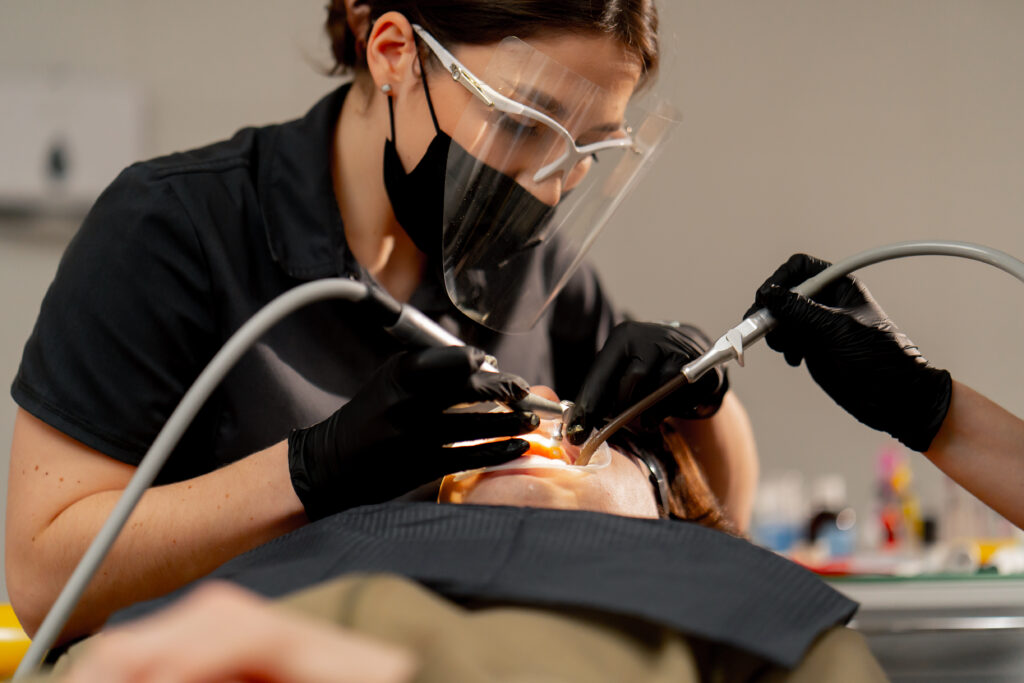
Yes, a dental hygienist can remove many stains from teeth. It removes surface stains caused by tea, coffee, red wine, smoking, and everyday food and drink. In fact, stain removal is one of the common reasons people book a hygienist appointment.
But there is a catch. Not all stains are the same.
Some stains sit on the outside of the teeth and can be cleaned professionally. Others are deeper inside the tooth structure and may need teeth whitening or another cosmetic dental treatment. This is why it helps to understand the difference before expecting a hygienist visit to completely change the colour of your smile.
A dental hygienist can make your teeth clean, smooth, and bright. They can remove plaque, tartar, and surface staining that brushing cannot remove. However, they do not bleach the natural shade of your teeth in the same way as whitening treatment does. So, if your teeth look dull, stained, or not as fresh as they used to be, a hygienist appointment is often a very good place to start.
Why Do Teeth Become Stained?
Tooth stains are common. Even people who brush well can develop staining. Tooth stains caused by:
• Tea
• Coffee
• Red wine
• Smoking or vaping
• Curry
• Tomato-based sauces
• Fizzy drinks
• Dark berries
• Poor brushing
• Some mouthwashes
• Ageing
• Certain medicines
Enamel (outer surface) can pick up pigments from food and drink. Plaque or tartar can make the tooth surface rough. It catches stains easily and makes teeth look yellow or brown. Some people stain more quickly than others. This can depend on diet, saliva, oral hygiene, tooth shape, and how often professional cleaning is carried out.
Surface Stains vs Deeper Tooth Discolouration
Surface Stains
Surface stains are outside of the teeth. These are the stains a dental hygienist can remove and are caused by:
• Tea and coffee
• Red wine
• Smoking
• Food pigments
• Plaque build-up
• Tartar
• Poor cleaning between teeth
These stains may appear brown, yellow, grey, or dark around the edges of the teeth.
Deeper Discolouration
Deeper discolouration is inside the tooth. A hygienist cannot polish this away, and it is caused by:
• Age-related darkening
• Trauma
• Certain antibiotics (taken during tooth development)
• Fluorosis
• Old root canal treatment
• Enamel thinning
Teeth whitening, internal bleaching, composite bonding, veneers, or other cosmetic options may be discussed.
How Does a Dental Hygienist Remove Stains?
A dental hygienist removes stains using professional tools and techniques that are more effective than home brushing.
Scale and Polish
Scaling removes plaque, tartar, and surface stains from the teeth. Polishing smooths the tooth surface. A scale and polish may remove stains from:
• Tea
• Coffee
• Smoking
• Food and drink
• Plaque build-up
• Tartar deposits
It can also help improve gum health and reduce bad breath.
Airflow Polishing
Airflow polishing uses a controlled stream of air, warm water, and fine powder to gently lift stains from the tooth surface. Many people like airflow polishing because it is more comfortable than traditional polishing. If you have sensitive teeth, airflow can be useful for removing stains caused by:
• Coffee
• Tea
• Red wine
• Tobacco
• Food pigments
• Plaque biofilm
It can also clean around braces, implants, crowns, and bridges when suitable.
Does Stain Removal Hurt?
For most patients, hygienist stain removal is comfortable. You may feel vibration, water spray, or light pressure during scaling and polishing.
If your gums are inflamed or your teeth are sensitive, some areas may feel tender. Tell your dental hygienist if you are nervous or sensitive. They can:
• Work more slowly
• Give you breaks
• Adjust the water or pressure
• Use sensitive techniques
• Focus on comfort throughout
A good hygienist will want you to feel as comfortable as possible.
Will My Teeth Look Whiter After Seeing a Hygienist?
Yes. But it depends on the staining. If your teeth are covered with surface stains, plaque, or tartar, professional cleaning can help improve your smile. Your smile may look brighter because the external staining has been removed.
But if your teeth are naturally darker or yellow inside the tooth, a hygiene cleaning will not whiten them. Many patients book a hygiene clean before whitening. This is sensible because removing plaque and surface stains first can help create a cleaner starting point.
Can a Hygienist Remove Smoking Stains?
Yes. A hygienist can remove smoking stains from teeth. Brown or dark surface stains caused by tobacco. A scale and polish or airflow treatment can remove these stains. But if smoking continues, stains are likely to return. Smoking also increases the risk of gum disease, bad breath, tooth loss, and oral health problems. A hygienist can remove smoking stains and also prevent oral health problems.
Can a Hygienist Remove Coffee and Tea Stains?
Coffee and tea stains are the most common stains a hygienist sees. These drinks contain colour compounds that can attach to the tooth surface over time. Professional cleaning can remove or reduce these stains. If you drink several cups of tea or coffee every day, staining may return after some time. Because your teeth are being exposed to staining drinks regularly. To reduce staining, do these:
• Drinking water after tea or coffee
• Avoiding sipping coffee all day
• Cleaning between your teeth daily
• Attending hygiene visits regularly
• Using a straw for iced coffee
• Brushing twice a day properly
You do not have to give up everything you enjoy. Small habits can help stains come back.
When Do Stains Need Teeth Whitening?
Teeth whitening is good for you if a hygienist removes surface stains, but your teeth still look yellow or dark. Teeth whitening is for:
• Natural yellow
• Age-related darkening
• Deeper internal stains
• Teeth that look dull despite cleaning
• Patients wanting a brighter shade
Professional teeth whitening should be provided by a registered dental professional. They make sure your teeth and gums are healthy before treatment and that the whitening is done safely. Whitening does not change the colour of crowns, veneers, fillings, bridges, or dentures. Your dentist can explain whether whitening is suitable after your hygiene appointment.
What Happens During a Stain Removal Appointment?
It starts with a conversation to tell them about stains or if you have sensitivity. The hygienist will do:
• Gum health assessment
• Plaque and tartar removal
• Stain removal
• Polishing
• Airflow polishing, if available
• Brushing and interdental cleaning advice
You feel your teeth are smooth after the appointment. Your mouth feels fresh and clean. The hygienist or dentist may suggest whitening if staining remains.
Benefits of Seeing a Hygienist for Stain Removal
Stain removal is not only about appearance. A dental hygienist can help protect your oral health. It also offers:
• Clean teeth
• Fresh breath
• Smoother tooth
• Reduce plaque and tartar
• Improve gum health
• Low risk of gum disease
• Better home care advice
• Early spotting of dental concerns
When teeth feel smooth and clean, they are often easier to maintain at home. It can help reduce future build-up.
How to Stop Stains from Coming Back?
Stains can return if you drink tea, coffee, red wine, or smoke regularly. But these things can help to slow them:
• Brush twice daily with fluoride toothpaste
• Clean between the teeth
• Rinse with water after staining drinks
• Avoid smoking
• Book regular hygienist appointments
• Brush gently
• Use an electric toothbrush if recommended
• Attend dental check-ups
Do not use harsh whitening toothpastes. Some can be abrasive if used too often. Ask your dentist or hygienist for advice if you are unsure.
Can Home Remedies Remove Stains?
Many people try home remedies (such as baking soda, lemon juice, charcoal toothpaste, or oil pulling). Some may seem to remove light staining temporarily, but they can also cause problems. Lemon juice is acidic and can damage enamel. Charcoal toothpaste may be abrasive.
Scrubbing too hard can make teeth more sensitive and wear down the enamel. Professional stain removal is safer because it is controlled and carried out by someone trained to protect your teeth and gums. It is better to ask a dental professional if you want brighter teeth than to rely on internet hacks.
Final Thoughts
A dental hygienist can remove many stains from the surface of teeth caused by tea, coffee, red wine, smoking, and everyday food and drink. A professional cleaning can make your teeth feel smoother, your mouth feel fresher, and your smile look brighter.
But hygienist stain removal is not the same as teeth whitening. If the discolouration is deeper or part of the natural tooth shade, whitening or another cosmetic treatment may be needed. The best first step is a hygiene appointment.
Your hygienist can remove plaque, tartar, and surface stains. They advise that whitening is right if you want a lighter shade. Clean teeth will support gum health, fresh breath and long-term oral health.