
If you live in London, your teeth are basically under daily attack. Not in a dramatic way just in a very modern, very normal way. Coffee on the commute. Tea at work. A cheeky glass of red wine on a Friday. Maybe you vape or smoke. Maybe you don’t, but you’re a loyal fan of curry, soy sauce, and anything that tastes good.
Over time, all of that shows up in the mirror. Teeth can look slightly darker, a bit yellow, or just duller than they used to. And that’s when people start searching for laser teeth whitening in London and comparing it to the home kits stacked in every pharmacy and splashed across social media.
So, is professional laser whitening genuinely better than home kits? Or is it mostly marketing? Let’s talk about it like a dentist would (but without the lecture). We’ll cover how it works, what results you can realistically expect, and which option makes sense for your teeth.
What Is Laser Teeth Whitening (And Is It a Laser?)
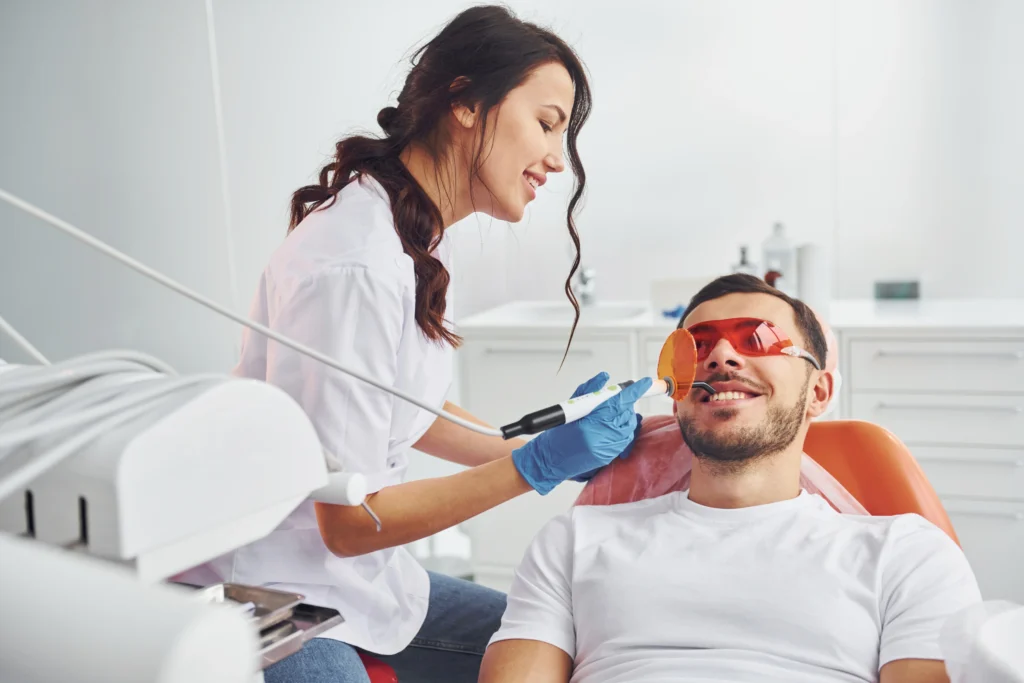
In many clinics, the whitening is done mainly by a professional-strength whitening gel (usually peroxide-based). A special light may be used to speed up or enhance the process. Some clinics do use lasers, but plenty use LED or light-activated systems and still refer to it as laser whitening because that’s what people search for. Either way, the important part is this: You’re getting stronger whitening products, applied safely, under professional supervision. And that’s the real reason in-clinic whitening often outperforms DIY kits.
Why Teeth Look Yellow (Even If You Brush Twice a Day)?
Before comparing options, it helps to know what you’re dealing with.
Teeth can look darker for a few different reasons:
1) Surface stains (extrinsic staining)
These come from things like:
- Tea and coffee.
- Red wine.
- Smoking or vaping.
- Dark sauces (soy, tomato-based, or curry).
- Certain mouthwashes (in some cases).
This is the easiest type of staining to improve with whitening.
2) Natural ageing (dentine shows through)
As we age, enamel can thin slightly, and the underlying dentine (naturally more yellow) shows through more. Whitening can help, but results vary.
3) Internal staining (intrinsic staining)
This can be caused by:
- Tooth trauma.
- Certain medications (tetracycline).
- Developmental factors.
Whitening sometimes helps, but not always. A proper assessment matters here.
Laser Teeth Whitening London vs Home Kits (The Real Comparison)
Let’s get practical and compare what most people actually want to know.
1) Speed (Who Wins?)
Laser teeth whitening London (in-clinic):
- A visible improvement in one appointment.
- It is ideal for events, weddings, interviews, and photos.
Home kits:
- Usually takes 1–2 weeks for a clear change (sometimes longer).
- Results are gradual and depend on consistency.
If you want fast results, in-clinic whitening is generally the winner.
2) Strength & Results (Who Gets Whiter?)
In clinics, dentists use stronger whitening agents than most over-the-counter kits. That doesn’t just mean whiter. It means:
- Better stain breakdown.
- More predictable shade lift.
- More even results.
Home kits can work, but the outcome depends heavily on the kit type. A cheap strip kit won’t compare to dentist-grade treatment. However — and this matters — dentist-provided home whitening trays can be excellent. They’re not the same as a supermarket kit. They’re custom-fitted and often use professional-strength gel (also safe to use for a long time). So the comparison is really:
- In-clinic whitening vs generic DIY kits → clinic usually wins clearly.
- In-clinic whitening vs dentist-provided custom trays → closer, depends on goals.
3) Safety (Which One Is Safer for Teeth and Gums?)
Whitening is safe when done properly. But it may cause problems when people do it at home.
In-clinic whitening:
- Teeth are checked first (for decay, cracks, or gum issues).
- A protected barrier is applied to the gums.
- A dentist can control the gel application.
- A dentist can adjust treatment if sensitivity spikes.
Home kits:
- One-size trays are available, which can leak gel onto gums.
- People may overuse kits trying to speed up results.
- Online gels may be risky or unregulated (big red flag).
If you’re someone who tends to go “If a little works, more must be better” … you’re safer with professional supervision.
What About Sensitivity? (The Dealbreaker for Many People)
Sensitivity is the main reason people hesitate, and fair enough tooth zingers are not fun.
Why can whitening cause sensitivity?
Whitening gels temporarily open microscopic pathways in enamel so they can break down stain molecules. That can irritate the nerve a bit, especially if you already have:
- Sensitive teeth.
- Gum recession (exposed roots).
- Enamel wear.
- A habit of brushing too hard.
In-clinic whitening sensitivity
Because it’s stronger and faster, you might feel: Quick zaps (shocks) during treatment. And 24–48 hours after the treatment, you may feel sensitivity. Good clinics reduce this with desensitising gel, gum isolation, and aftercare advice.
Home kit sensitivity
Home kits can be gentler, but sensitivity still happens when people:
- Wear strips too long.
- Use them too frequently.
- Combine whitening with abrasive whitening toothpaste.
- Don’t take breaks.
Both can cause sensitivity. Professional treatment is more controlled; DIY can be unpredictable.
Cost in London: Why Prices Vary (And What You’re Paying for)?
London pricing is all over the place, and it can feel confusing.
Why the difference? You’re not just paying for “whitening gel”. You’re often paying for:
- A suitability check (essential).
- Proper gum protection (very essential).
- Professional-grade products.
- A controlled process with monitoring.
- Aftercare and guidance.
- Custom trays and top-up gel.
Cheaper deals sometimes skip steps (or rush them), and that’s where uneven results or gum irritation become more common. If you’re comparing laser teeth whitening London to a £20 home kit, yes, it’s more expensive. But the product, process, and safety standards are not comparable.
Which Option Lasts Longer?
Whitening isn’t permanent, whichever route you choose. Teeth naturally re-stain over time.
How long do results typically last?
It depends on your habits, but many people maintain results for:
- Several months to a year.
- Sometimes longer with maintenance.
What makes whitening fade faster?
- Smoking/vaping.
- Lots of tea/coffee
- Red wine.
- Poor oral hygiene.
- Skipping hygiene appointments.
How to make whitening last longer?
- Rinse with water after coffee/tea.
- Use a straw for iced coffees or cola (yes, it helps).
- Wait 30 minutes after acidic drinks before brushing.
- Get regular hygienist cleanings.
- Consider occasional top-ups rather than redoing the full treatment.
The dentist-provided trays can be handy, and their maintenance is easy.
The Best Option for Both Worlds (Hybrid Whitening)
It includes both approaches. In-clinic whitening is ideal for an initial fit. And then the dentist gives custom trays to maintain and fine-tune the shade at home. Many dentists prefer this option because it has many benefits, such as:
- Fast visible change.
- More control in the long term.
- Fewer full treatments are needed later.
- Often, it is a better value over time.
If you want a bright smile that stays bright, a hybrid is hard to beat.
Who Should Not Whiten Without a Check-Up?
Please don’t skip this part. You should get a dental check first if you have:
- Cavities or broken fillings.
- Gum disease or bleeding gums.
- Cracked teeth.
- Severe sensitivity.
- Lots of crowns/veneers on visible teeth (they won’t whiten).
Also, whitening won’t change the colour of:
- Crowns.
- Veneers.
- White fillings.
So if you whiten and your natural teeth brighten, old dental work can suddenly stand out. A dentist will plan for this properly.
Home Kit Types (Not All “DIY Whitening” Is Equal)
If you’re leaning towards home kits, know what you’re buying.
Whitening toothpaste
It helps with surface stains, but doesn’t dramatically change your tooth shade. Some are abrasive and can wear enamel (when overused).
Whitening strips
These are convenient and can work for mild staining. They may whiten unevenly if teeth are crowded.
LED kits online
You may have mixed results. The light itself isn’t magic — the gel does the work. Some are basically expensive gimmicks.
Dentist-provided custom trays (best home option)
It provides even coverage and predictable results. It has a professional gel, so it is used safely over time. If you want to do it at home but still want proper results, custom trays are usually the smart pick.
Final Verdict: Is Laser Teeth Whitening London Better Than Home Kits?
Whitening isn’t about chasing an unnatural shade of white. It’s about restoring brightness and confidence. It can enhance your smile and improve photographs. And also help you feel fresh, which boosts your professional confidence. Most of the time, yes, especially compared to generic DIY kits. Laser teeth whitening in London is better if you want:
- Faster results.
- Noticeable whitening.
- Gum protection.
- Predictable outcomes.
Dentist-custom trays whitening may work for you if your budget is limited and your staining is mild. You prefer gradual improvement, and you are consistent with routine. Book a consultation to make sure your teeth are healthy if you’re considering laser teeth whitening. Ask realistic questions. Understand what results are achievable for your stain type. Whitening can be a safe and effective way to refresh your smile when done properly.